A conversation with Dr. Rita Perintfalvi
As the world tries to make sense of Hungary’s political earthquake, one question has received surprisingly little attention: what role did religion play?
To explore how faith functioned as both a pillar of Orbán’s power and a fault line in its collapse, Faith in Democracy spoke with one of the most important voices on the subject.
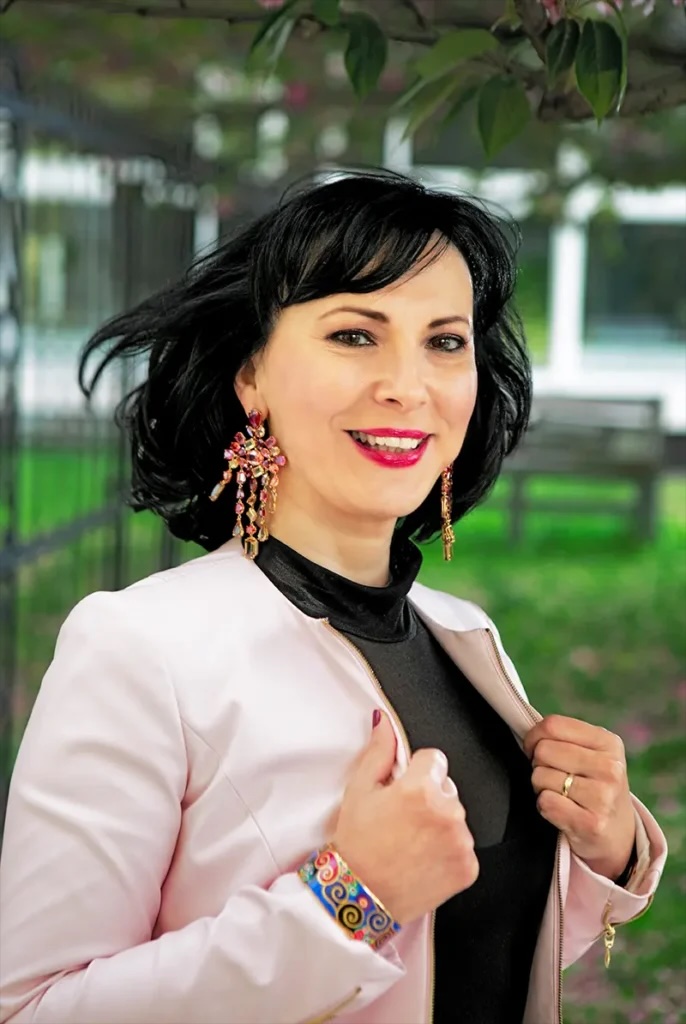
Dr. Rita Perintfalvi is a Catholic theologian widely regarded in Hungary as a public opinion leader on church affairs, women’s rights, and social justice.
She has been a persistent, courageous critic of the Orbán regime’s exploitation of religion, speaking out at significant personal and professional cost.
What actually broke? Many believed Orbán’s system was deeply entrenched—what, in your view, finally caused it to fall? What broke?
Over the past 16 years, the Orbán regime steadily intensified the complete dismantling of democratic institutions, the disregard for fundamental human rights, the criminalization of certain minorities — particularly refugees, Muslims, and members of the LGBTQ community — and political violence.
The real turning point came with the introduction of the “Stop Pride” law in March 2025 and the announcement of the so-called “Transparency Law” in May 2025. The latter, modelled on Russian legislation and disguised as “sovereignty protection,” would have destroyed what remained of the free press and all civil society organizations, with severe penalties threatened for anyone openly criticizing a government that was systematically dismantling the rule of law.
The draft provoked such strong public resistance that the government backed down and postponed its introduction. The banned Pride parade took place regardless and became the largest human rights demonstration in Hungarian history — a true celebration of freedom that had long since grown beyond LGBTQ rights alone. The massive corruption scandals involving government members and politicians close to the Fidesz-KDNP alliance, the increasingly visible presence of Russian influence, and the deepening crises in the economy, healthcare, education, and public transport opened people’s eyes to reality. They awoke from a sixteen-year hypnosis.
How did “illiberal Christian democracy” unravel? You’ve written about Orbánism as a fusion of religion and political power — what proved most fragile in that model?
The turning point in this regard was the so-called pardons scandal, which came to light in February 2024, and whose main actors were church dignitaries and politicians who publicly presented themselves as devout Christians.
It became known that, on the occasion of Pope Francis’s visit in autumn 2023, several convicted criminals had been pardoned by the head of state. Katalin Novák, the then president, signed the pardon of Endre K., who had vigorously defended János V., himself a convicted serial child abuser and director of a children’s home, while intimidating the victims and forcing them to withdraw their testimonies against the director.
Not only Novák, but also the then Minister of Justice Judit Varga signed the pardon request. Both described themselves as devout Christians, yet advocated for the defence of a cover-up offender. It emerged that Novák had made this decision at the request of Zoltán Balog, who was at the time both Novák’s adviser and President of the Synod of the Hungarian Reformed Church. To this day, neither his motivation nor the nature of Prime Minister Orbán’s and his wife Anikó Lévai’s relationship to Endre K. is known.
The incident triggered a massive crisis of credibility in the Reformed Church, and countless people left the church. This case exposed with particular clarity the hypocrisy of the Orbán regime and the grave consequences of the close entanglement of politics and churches — and the churches’ own moral low point.
In autumn 2024, paedophilia scandals shook the Catholic Church, with seven Catholic priests suspended in succession. Crimes against minors and their cover-up in both church and political spheres devastated trust in a government that had branded itself “family-friendly” and “child protection-oriented.”
Was this a political shift or a moral/theological turning point? Do you see this moment as more than an election result — as a deeper reckoning with how faith has been used in public life?
The Orbán regime turned Christianity into a political weapon and reduced the churches to instruments of its electoral campaign. It did so by introducing a new church law in 2011 that made the question of which church could retain its legal status, and with it, state funding, a political decision. Churches were also handed numerous state responsibilities:
education, the running of children’s homes and foster care networks, and the maintenance of the social welfare system. These are tasks they cannot continue without state support, which deepened their dependency and left them financially completely defenceless.
Current church leaders need to understand two things: first, that under the Orbán era they lost their freedom just as they did during the communist years; and second, that they must develop a funding model that makes them independent in the long term. Because as long as this funding structure remains, whoever holds power will treat the churches like puppets.
What does this mean beyond Hungary? Orbán has been a model for movements globally — what lessons should democracies, especially in the U.S., take from his defeat?
What characterizes the United States and Trump’s power is that Christian circles stand behind him there too, particularly evangelicals, Catholic integralists, and Protestant fundamentalists. They helped bring him to power the first time. The alliance between throne and altar is very strong in the US as well, though in a different form.
Trump is just as much a right-wing populist as Viktor Orbán. He promises everything the people demand — and the opposite of it too, even when it is nonsense.
This kind of populism is always a form of hypnosis. One that works for a while. But then people wake up, and when they do, they become terribly angry, because they will not understand why they followed the leader.
Democratic actors, civil society, activists, the press, and politicians can only do so much — relentlessly trying to wake the sleeping. The many attempts eventually break through. Sometimes as unexpectedly, and with the force of an all-sweeping popular verdict, as is happening right now in Hungary. Let that be a source of hope.
What happens next — and what’s at risk? How durable is this shift, and what must change — politically, culturally, and spiritually — for democracy to truly take root?
The last 16 years have brought destruction to Hungary in many ways, but the most grave is perhaps the moral and psychological destruction wrought in the minds and souls of the people.
It convinced many that an authoritarian regime sliding into dictatorship was worth more than democracy — simply because it promised security. And it did so in areas where no real danger ever existed: gender, the LGBTQ community, war.
Hungary has been under a continuous state of emergency since 2016, first the emergency caused by “mass immigration,” then the pandemic emergency, then the war emergency. Accordingly, the country has been governed by decree, granting the government unlimited power. On any given day, they could introduce or repeal any law they chose. And they did, usually under cover of night. That was the real threat.
Now the entire nation must come to terms with the fact that life can be normal, peaceful, and beautiful again. Because until now, the Orbán regime has been at war with its own people — and in the name of peace, no less. People must learn again to breathe freely, to express their thoughts freely, and to criticize the government.
In other words, we must relearn from the ground up everything that democracy means. It will be a tremendous task, but at last we can begin. We have waited a very long time for this moment.
See how faith changes the story.
Discover how faith-rooted actors worldwide are defending democracy and standing up to authoritarian power.