
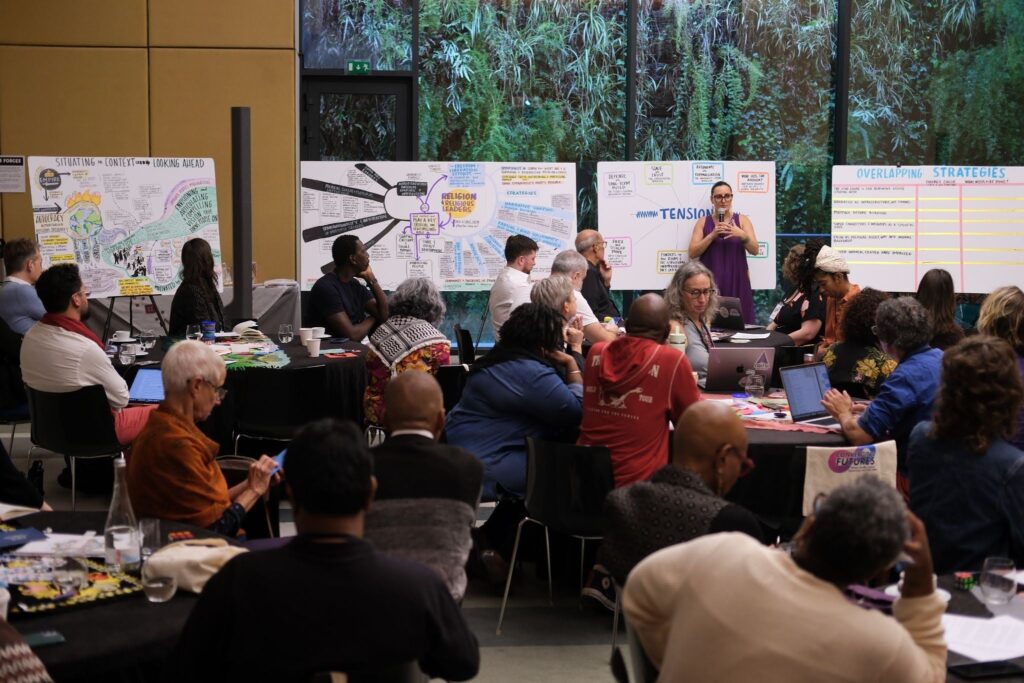
In March, Faith in Democracy partnered with the Unitarian Universalist Service Committee to convene faith leaders, movement organizers, researchers, and philanthropic partners from around the world for Converging Futures: Where Gender Justice, Democracy, and Faith Meet.
We gathered in Lisbon because we are living through a moment that requires new kinds of alignment. Around the world, authoritarian movements are learning from one another, sharing strategies, and building transnational power. Again and again, attacks on women, LGBTQ+ people, migrants, racial and religious minorities, and civil society are not isolated policy fights. They are early warning signs of a broader effort to weaken democracy, narrow belonging, and concentrate power.
Many of these movements use religious language to justify exclusion and control. They present themselves as defenders of faith, family, and tradition while advancing political projects that undermine pluralism, human dignity, and democratic institutions. The result is a dangerous distortion of religion: faith becomes a tool for fear rather than courage, domination rather than liberation, and division rather than the common good.
But the convening also confirmed something deeply hopeful: there is a growing global network of faith-rooted leaders and secular allies who are ready to meet this moment.
The problem we are confronting
Across regions and traditions, participants described a common pattern. Anti-rights and authoritarian movements are organizing across borders. They are investing in narrative infrastructure, legal strategies, political alliances, media ecosystems, and religious networks. They know that culture, identity, and belonging shape political behavior. They understand that religion can confer legitimacy, mobilize communities, and define who is seen as worthy of rights and protection.
Too often, pro-democracy movements have treated faith as secondary, marginal, or too complicated to engage. Some secular movements have understandably approached religion with caution because of the harm caused by religious institutions and actors. Many faith communities, meanwhile, have struggled to respond with the speed, clarity, and coordination required.
That gap has created an opening for authoritarian and anti-rights forces.
If movements for democracy, gender justice, and human rights do not engage religion, we leave one of the most powerful sources of meaning, moral imagination, and community formation to those who would weaponize it. We also miss the many faith leaders who are already organizing for pluralism, dignity, freedom, and democratic life—often at great personal and institutional risk.
The solution we see emerging
Our response cannot simply be reactive. It is not enough to fact-check disinformation or denounce Christian nationalism, religious nationalism, or anti-gender ideology after the damage has been done. We need a proactive strategy that builds durable relationships, shared analysis, trusted leadership, and compelling moral narratives across borders.
Participants came from five continents, including faith leaders, feminist and LGBTQ+ movement organizers, human rights advocates, researchers, and funders. Together, we explored how anti-rights movements operate, how religious narratives are being used to justify democratic backsliding, and how faith-rooted and secular actors can work together without flattening real differences.
We believe religious communities and faith-rooted leaders can play a crucial role in resisting authoritarianism by strengthening the broader ecosystem. Faith leaders can help communities interpret what is happening in moral terms, resist propaganda and scapegoating, protect vulnerable neighbors, and recover traditions of courage, solidarity, and public witness.
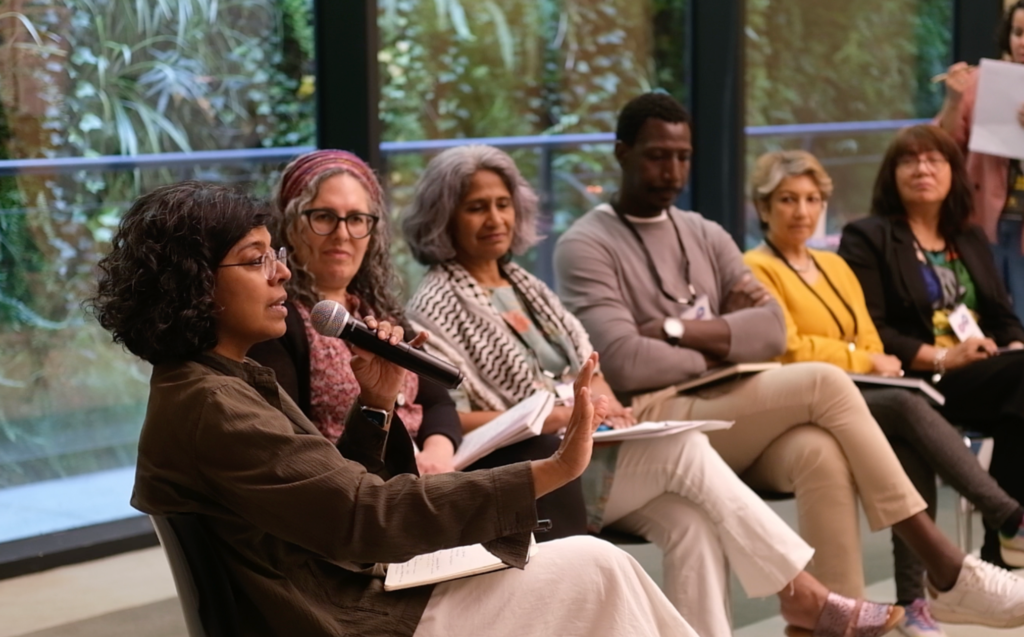
At the same time, this work must be grounded in humility and accountability. Partnership with faith actors cannot require movements for gender justice or LGBTQ+ inclusion to compromise their commitments. Instead, we need honest, strategic collaboration that recognizes both the power and the complexity of religion in public life.
Over several days, we began to identify a common denominator: a shared commitment to defending democracy and human dignity against movements that use fear, exclusion, and control to roll back rights and consolidate power.
We also saw the outlines of a field that needs deeper investment. Around the world, courageous leaders are already doing this work, but many are isolated, under-resourced, and disconnected from peers facing similar challenges in other regions. They need spaces for shared learning, strategic coordination, narrative development, and leadership formation.
The convening showed that this network exists. Now it needs to be nurtured.
Where we go from here
Faith in Democracy will continue to cultivate and expand this emerging global network of faith-based democracy defenders and movement partners.
In the months ahead, we will focus on three priorities.
- First, we will continue building leadership accelerators that equip faith-rooted leaders and their allies to understand authoritarian and anti-rights strategies, develop effective public narratives, and organize communities for democratic resilience. These accelerators will help leaders move from analysis to action in their own contexts.
- Second, we will create more opportunities for global learning. Leaders confronting religious nationalism in one country often have insights that can help leaders facing anti-gender or authoritarian movements elsewhere. We want to make those connections more intentional, so that strategies, stories, and lessons can travel across borders while remaining grounded in local realities.
- Third, we will strengthen the connective tissue among faith leaders, movement organizers, researchers, and funders. The movements we oppose are coordinated and well-resourced. Our response must be relational, strategic, and sustained. That means investing not only in individual projects, but in the infrastructure that allows people to learn together, act together, and build power over time.
An invitation
The Lisbon convening reminded us that this work is difficult, but not lonely. Across the globe, people of faith and conscience are refusing to surrender religion to authoritarianism. They are reclaiming faith as a source of courage, solidarity, and democratic imagination.
We are grateful to the leaders, partners, and funders who joined us in Lisbon and to all those who are helping build this field. Together, we can confront the misuse of religion in public life while lifting up the faith-rooted leadership our democracies urgently need.